Definition
An engineered (agglomerated) stone slab is a surface material made by combining crushed, screened and washed marble, basalt, granite and quartz aggregates of 0.1–10 mm grain size with a binder into a slab.
Production at Terastone
Terastone combines the aggregates with BRETON vacuum-vibration technology. The water/cement ratio is very low and vibration is applied under vacuum, giving a non-porous, compact material. Apart from natural aggregate and cement, no chemical binders such as polyester or resin are used.
Technical properties
Flexural strength is 11.50 N/mm², water absorption by weight 1.5–2.5% and surface gloss 65. It is non-combustible and non-radioactive; it does not ignite or release toxic gas. Thousands of square metres can be made with consistent colour, texture and appearance.
Size and use
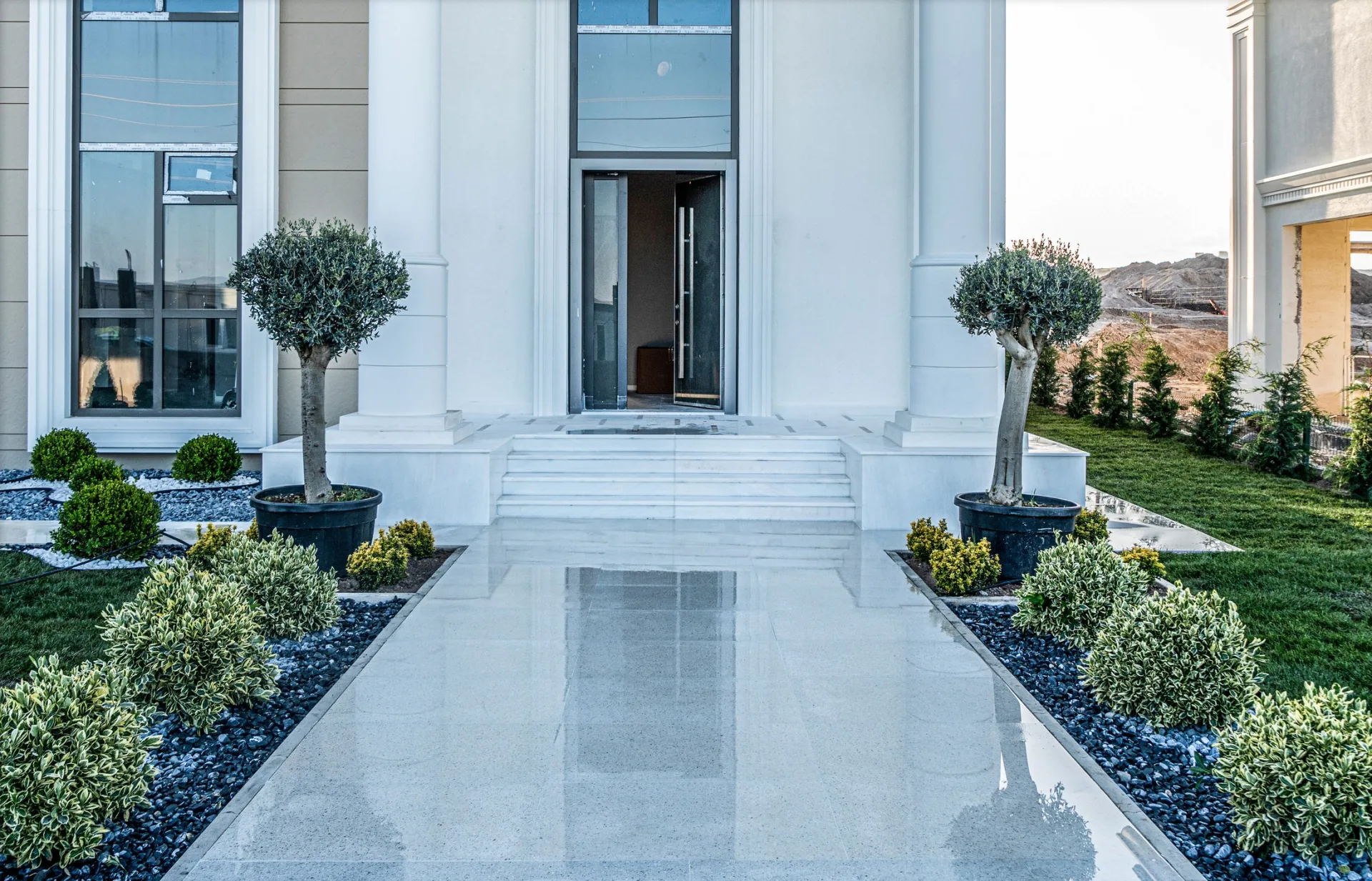
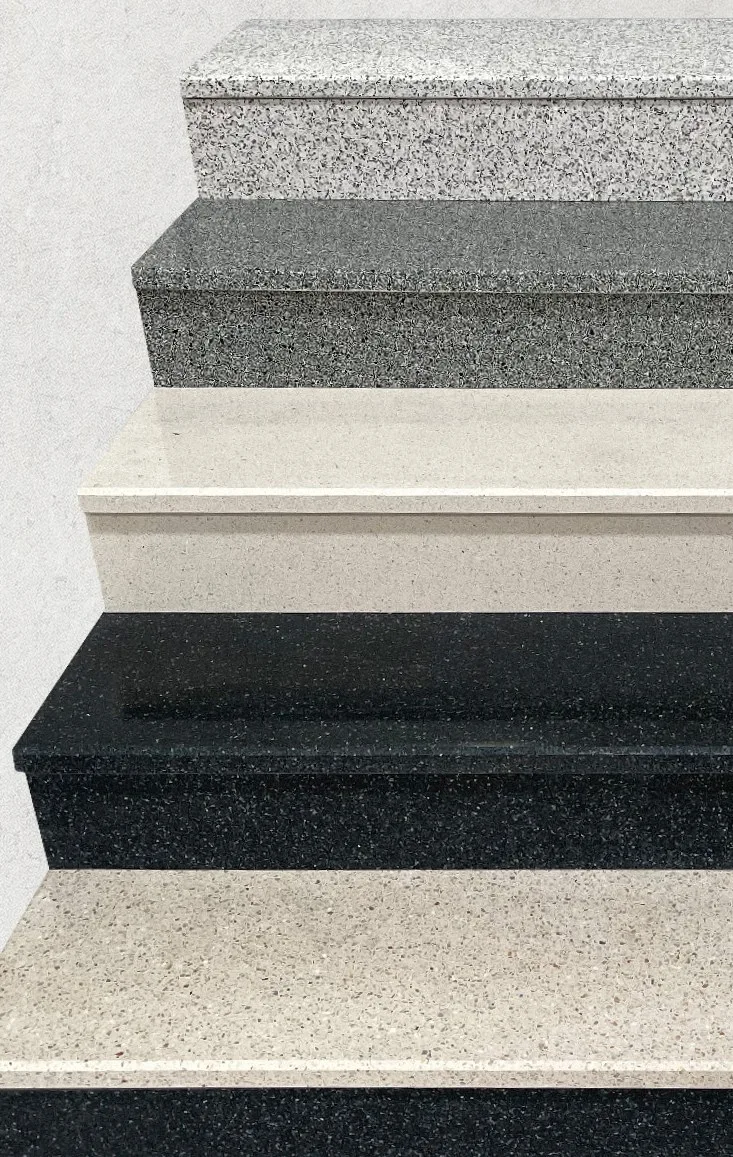
Slabs are 68×150×3 cm and weigh 70 kg per square metre. They are cut to size as facade cladding, flooring, stair treads, window sills, copings and parapets, thresholds, countertops and skirting. They are made to TS EN 15286 for facades and TS EN 15285 for floors and stairs.